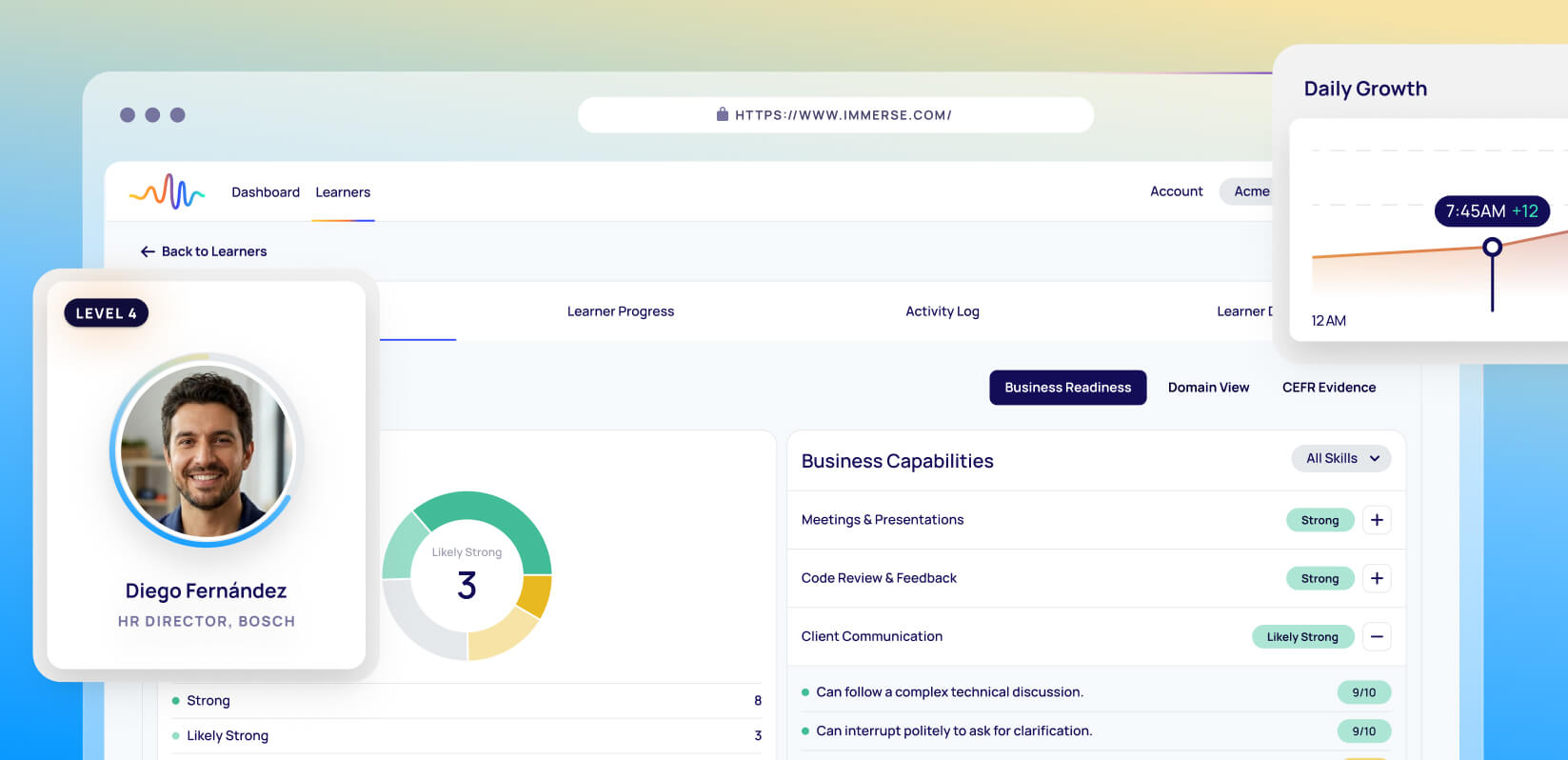
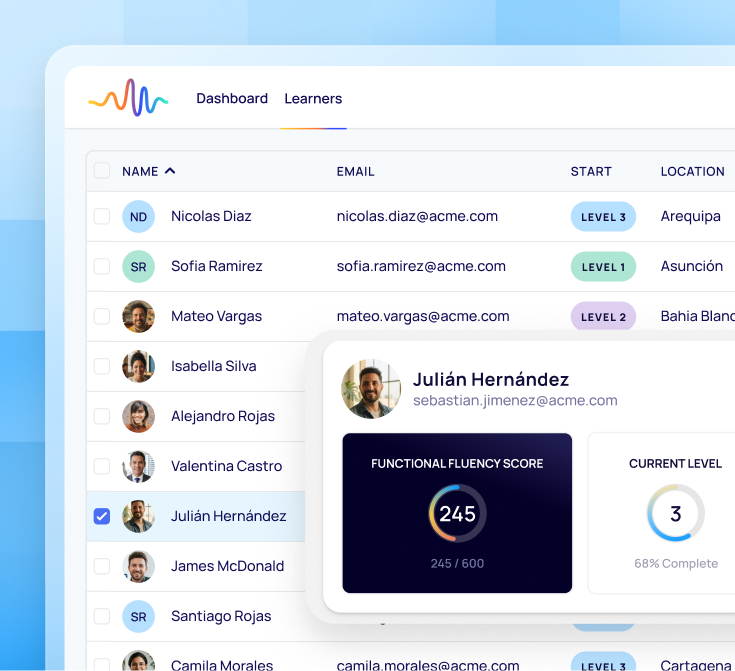
Fluency Mapping is the diagnostic and visibility layer of Fluency Performance, bringing assessment and practice data into a unified dashboard that shows capability against role-specific standards and translates it into real work readiness.
Fluency Intelligence uses workplace language and scenarios to enhance interactions. Learners engage with real terminology and situations, fostering fluency in their actual environment.
Fluency Mapping ENG
This is the 3rd card
Fluency Intelligence uses workplace language and scenarios to enhance interactions. Learners engage with real terminology and situations, fostering fluency in their actual environment.
Starting Point Assessment
Establish a confident entry point
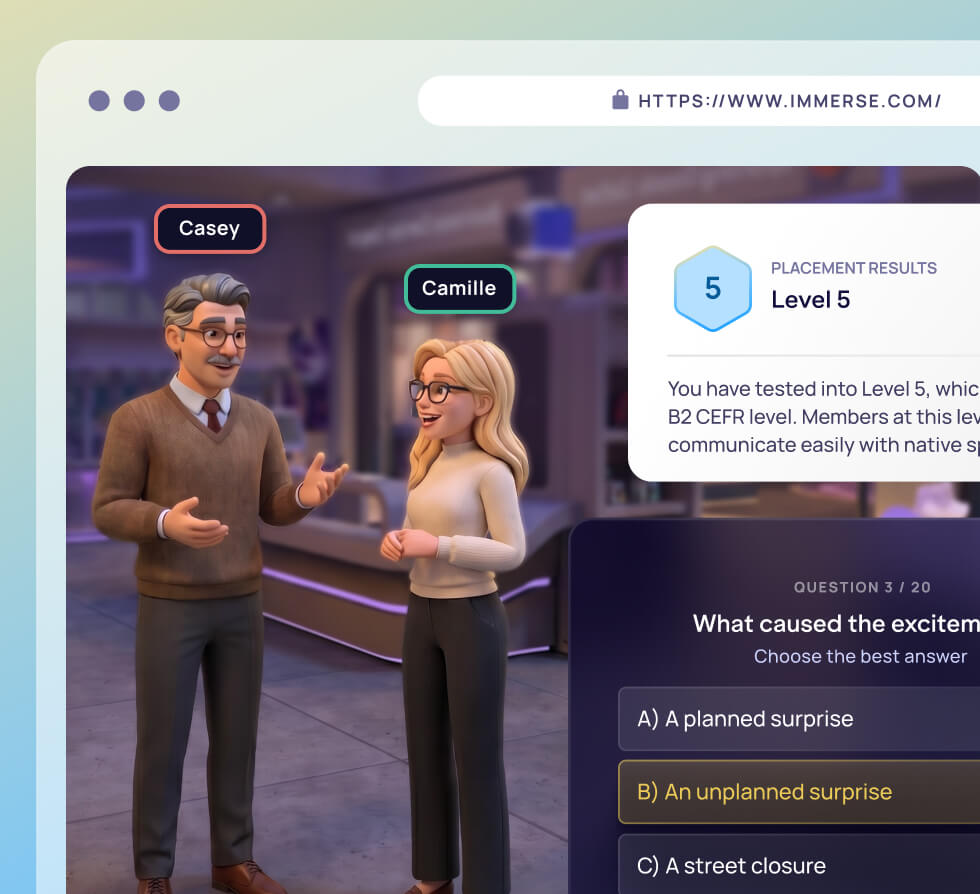
Learners engage with authentic workplace conversations to establish an initial fluency baseline. This placement experience identifies where to begin—so practice starts at the right level, with the right expectations, from day one.
Level readiness assessment
Validate readiness through real conversations
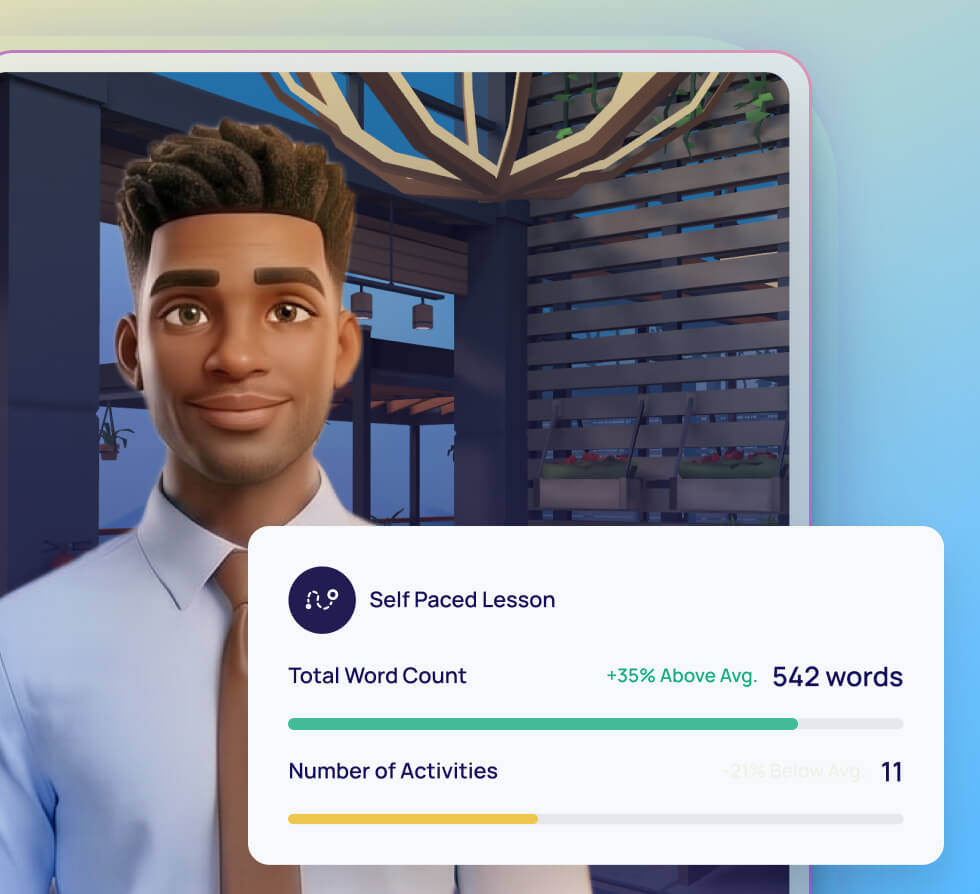
Simulation-based assessments place learners in realistic workplace conversations with AI avatars. Performance across tasks determines readiness to progress, ensuring advancement is based on demonstrated capability, not time spent or content completed.
Embedded performance signals
Practice that generates insight
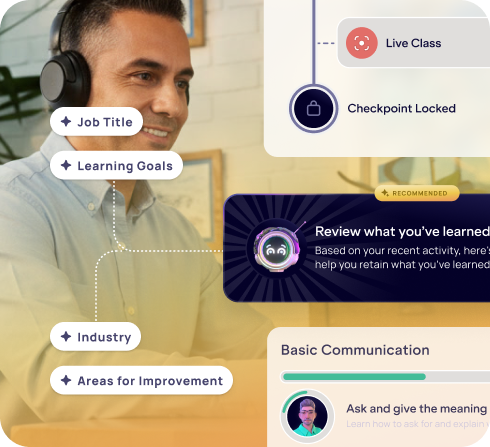
Every practice interaction contributes performance data. Fluency Mapping uses this evidence to track progress over time and surface where communication capability is strengthening or breaking down across real workplace scenarios.
Fluency Performance Score
Capability verified through evidence
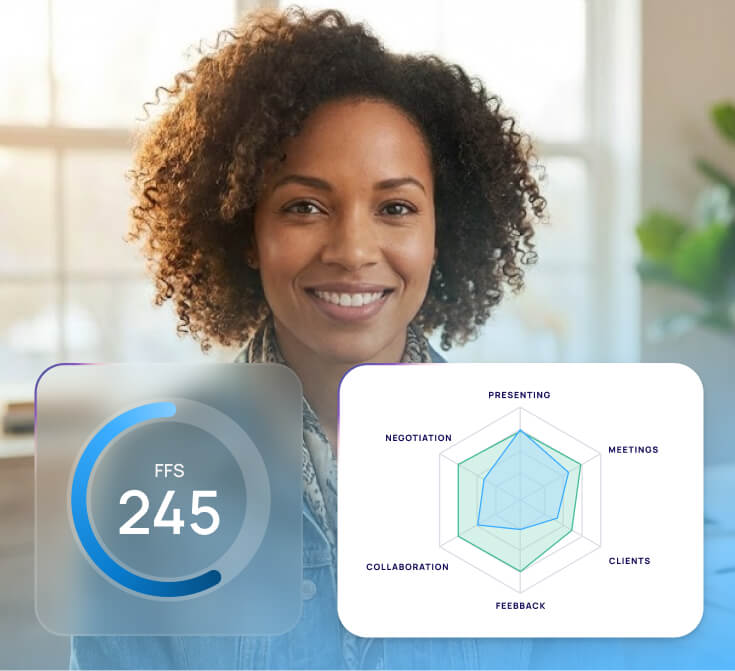
The Functional Fluency Score validates skill development through sustained evidence across assessments and practice. Skills are confirmed only through repeated real-world use, so mistakes do not penalize learners. The result is a living score that reflects what someone can reliably do—not just what they recalled once.
Why Fluency Mapping Matters
Because fluency only creates value when it’s visible and interpretable
Language programs report progress through levels or test scores, but these often fail to show what learners can do at work. Program owners must translate scores into decisions about readiness and performance. Fluency Mapping closes this gap by unifying assessment and practice data into a Dashboard that makes communication capability visible and actionable.
Clarity At Scale
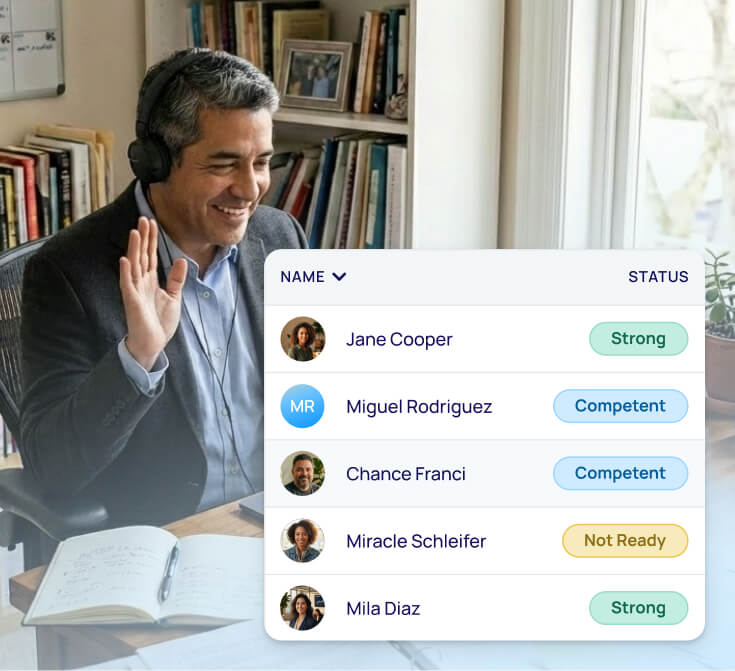
Communication behavior across practice, assessments, and live instruction is synthesized into a single Dashboard, making readiness visible at the individual and role level with evidence-based answers to practical questions.
Why this Matters
Design ensures relevance. AI expands access to practice.
Readiness, Not Just Levels
Fluency Mapping shows what learners can do — lead meetings, present to stakeholders, handle complex interactions — based on demonstrated communication behavior, not standardized scores.
Why this Matters
Because deployment and promotion decisions require practical evidence, not inferred capability.
Assessment Grounded In Real Interaction
Simulation-based assessments place learners in realistic workplace conversations, capturing how they communicate in context rather than on decontextualized test items.
Why this Matters
Because authentic use produces a more accurate picture of workplace readiness than a one-off test.
Fluency Mapping reveals communication capabilities. Fluency Impact links clarity to business outcomes, showing fluency's effect on performance and ROI.
"Our frontline managers finally have visibility into language performance. We’re not guessing anymore — we’re making staffing and promotion decisions based on real fluency data."










.jpg)