Fluency Intelligence uses workplace language and scenarios to enhance interactions. Learners engage with real terminology and situations, fostering fluency in their actual environment.
Fluency Intelligence ENG
This is the 3rd card
Fluency Intelligence uses workplace language and scenarios to enhance interactions. Learners engage with real terminology and situations, fostering fluency in their actual environment.
Context-Driven Practice
Practice that reflects real roles and real language
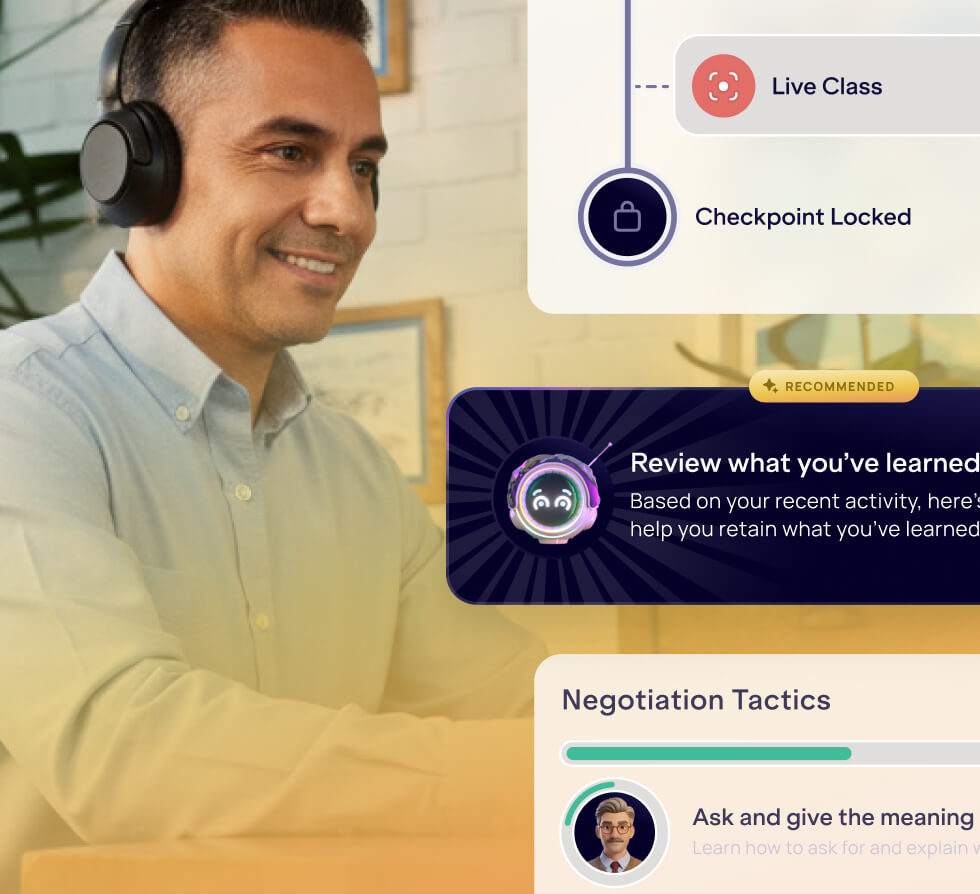
Fluency Intelligence applies organizational language, role context, and workplace scenarios to shape every practice interaction. Learners engage with the terminology, situations, and communication patterns they actually use at work, so fluency develops inside their real operating environment, not a generic one.
Learner-Directed Exploration
Autonomy to practice what matters most
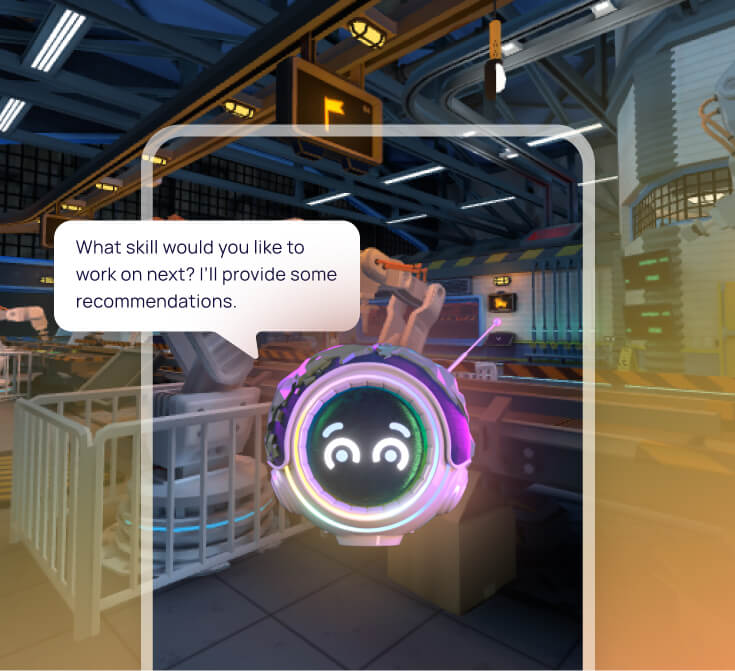
On-demand AI tools give learners control to explore topics, scenarios, and language relevant to their immediate needs or interests. Whether preparing for an upcoming meeting or reinforcing a weak area, learners can practice purposefully, without waiting for the next scheduled session.
Performance Signal Engine
Gaps surface through real communication evidence
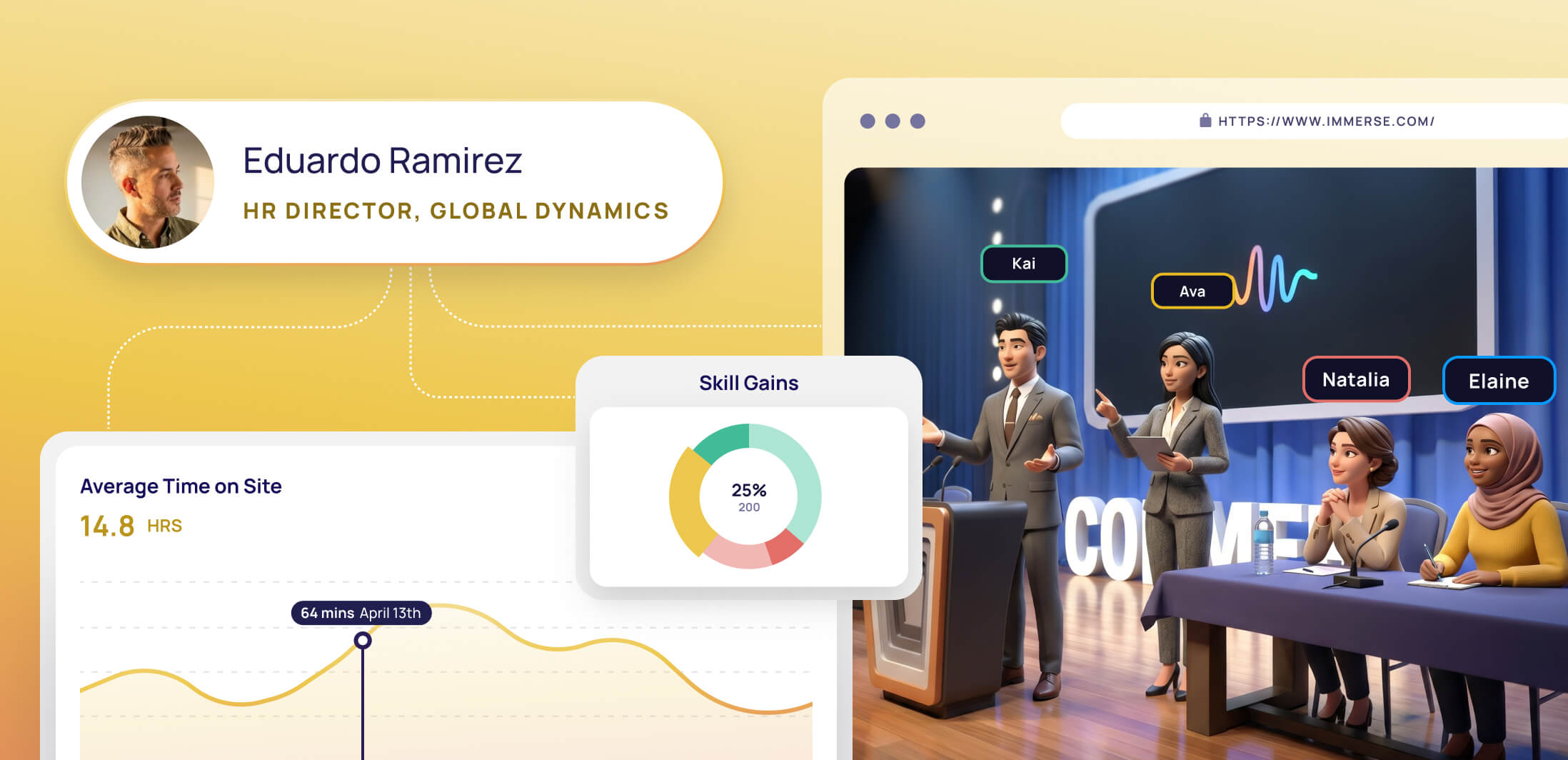
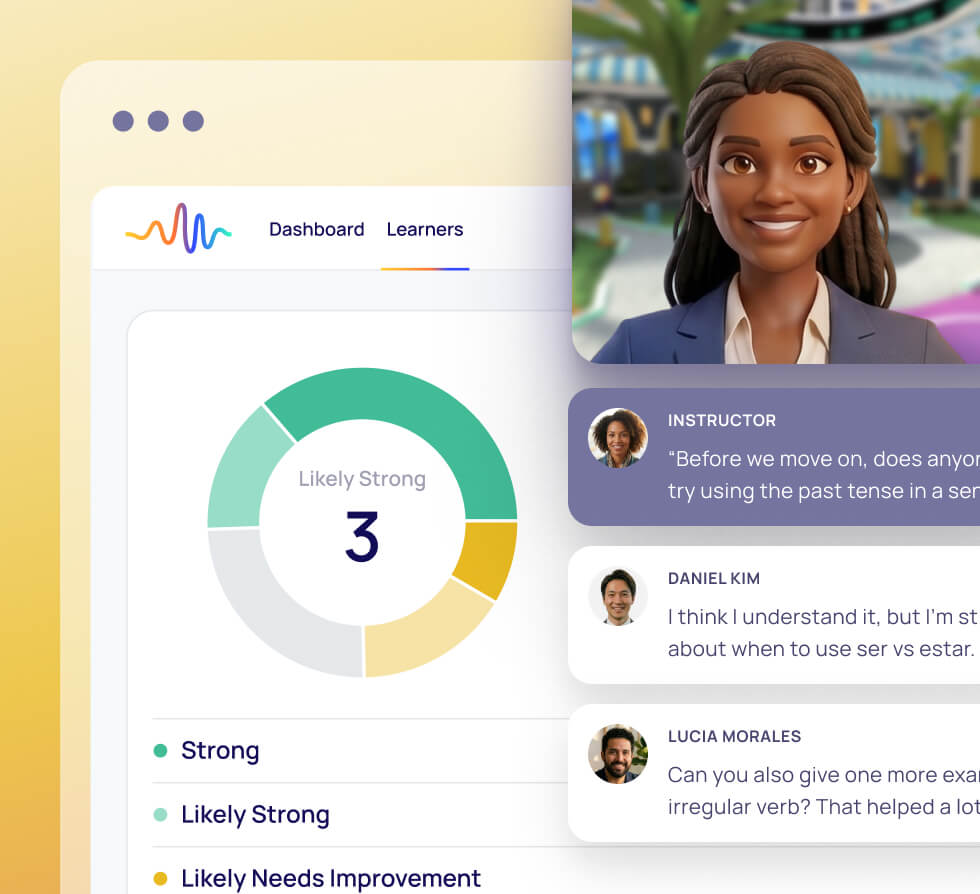
Behind the dashboard, Fluency Intelligence analyzes sustained communication behavior—not one-off moments—to identify where skills are emerging, stable, or breaking down. These performance signals power gap detection across individuals and teams, ensuring insight is grounded in repeated, real-world use.
From Language to Capability
Progress that makes sense to the business
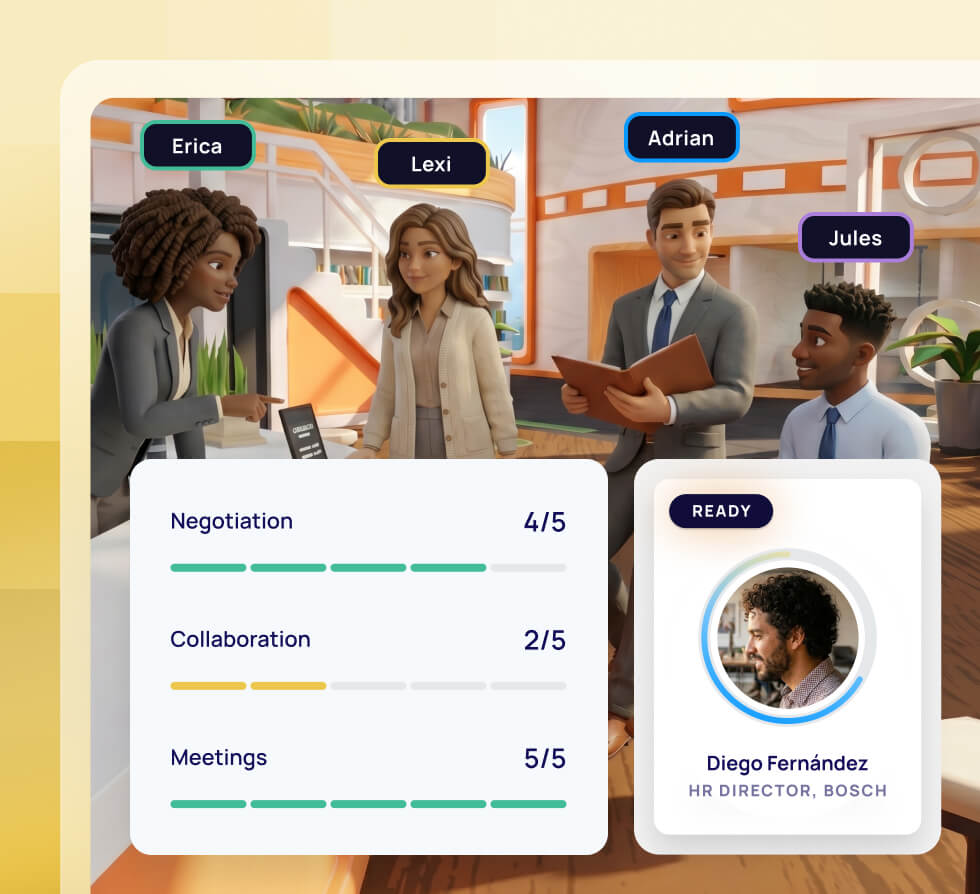
Fluency Intelligence translates language development into clear business-relevant capabilities—such as readiness for presentations, negotiations, or customer interactions. This makes progress easier to interpret, align, and act on, turning language growth into signals leaders can understand and trust.
Why Fluency Intelligence Matters
Because one moment doesn't prove capability — a pattern does.
Fluency Intelligence tracks communication behavior across time, looking for consistency, not just scores, so you always know whether real performance is building or stalling.
Continuous Development
Every interaction builds on the last, preventing reset cycles and fragmented progress.
Why this Matters
Because fragmented practice doesn't build lasting capability — every interaction should move you forward, not reset.
Evidence, not Assumptions
Progress is validated through sustained communication behavior—not isolated moments.
Why this Matters
Because one strong performance doesn't prove readiness — sustained behavior across time does.
Targeted Development
Gaps in communication capability are identified and surfaced as precise, actionable development priorities.
Why this Matters
Because generic feedback doesn't close real gaps — precision does.
Fluency Intelligence generates continuous evidence of real communication. Fluency Mapping transforms that evidence into a clear, trusted view of workplace readiness.
"For the first time, we can connect language progress to operational outcomes. That visibility makes it a strategic investment, not a cost."











.jpg)