.jpg)
.jpg)
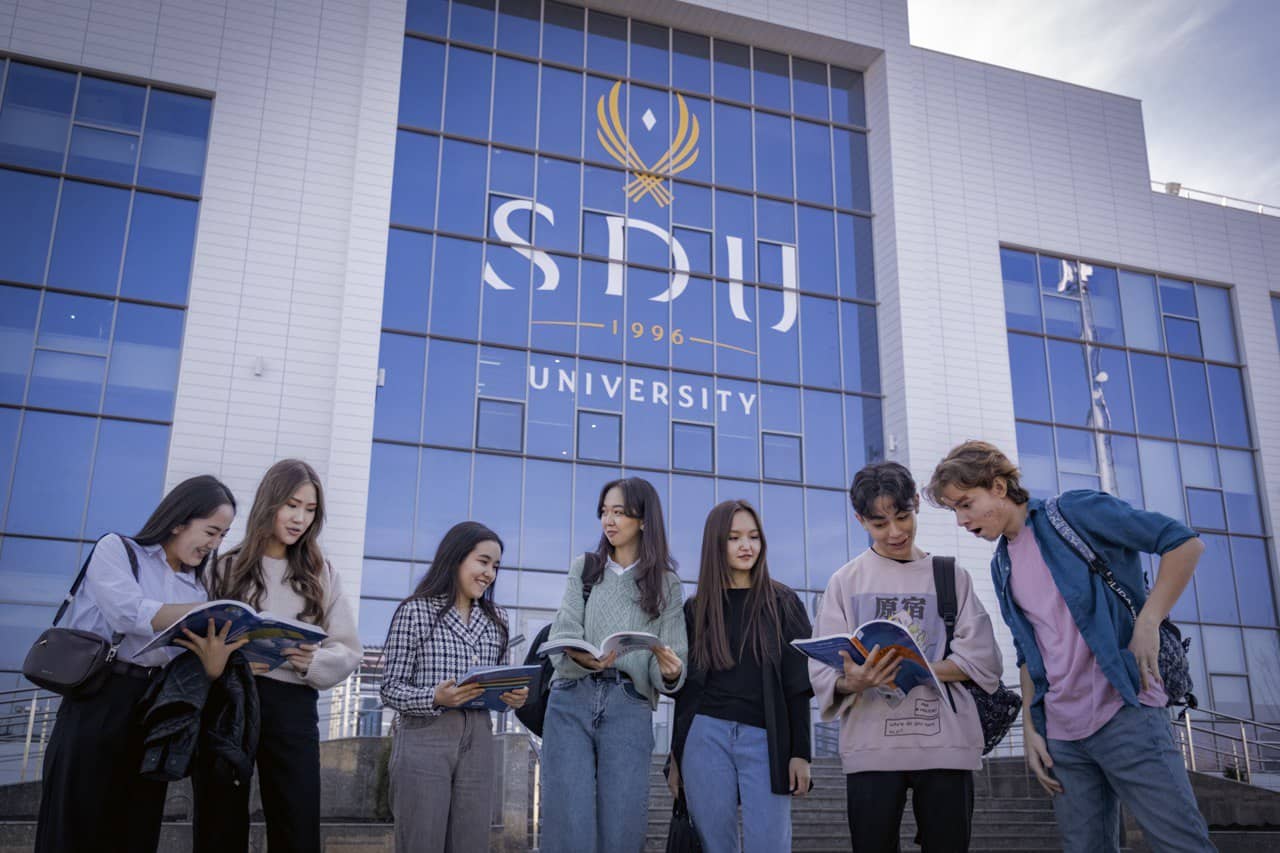
SDU University in Kazakhstan sought an optional supplement to support the development of future English teachers. Faculty aimed to strengthen speaking confidence, pronunciation, and overall engagement with English use in realistic contexts. These priorities aligned closely with IMMERSE’s Fall 2025 pilot, which offered select higher education institutions early access to a new self-paced learning experience designed to extend meaningful speaking practice beyond the classroom.
The pilot program
The Fall 2025 pilot introduced universities to IMMERSE’s self-paced AI program, giving them a flexible and scalable model for strengthening communication capability, increasing engagement, and tracking progress across a full academic term. The program features more than 400 expert-designed micro-lessons aligned with CEFR, each built around a consistent four-part flow guided by Adaptive AI and set in realistic 3D scenes such as meeting rooms, doctor’s offices, or airports. This structure gives learners repeated opportunities to apply new language in context while faculty gain clear visibility into performance through built-in analytics.

SDU University
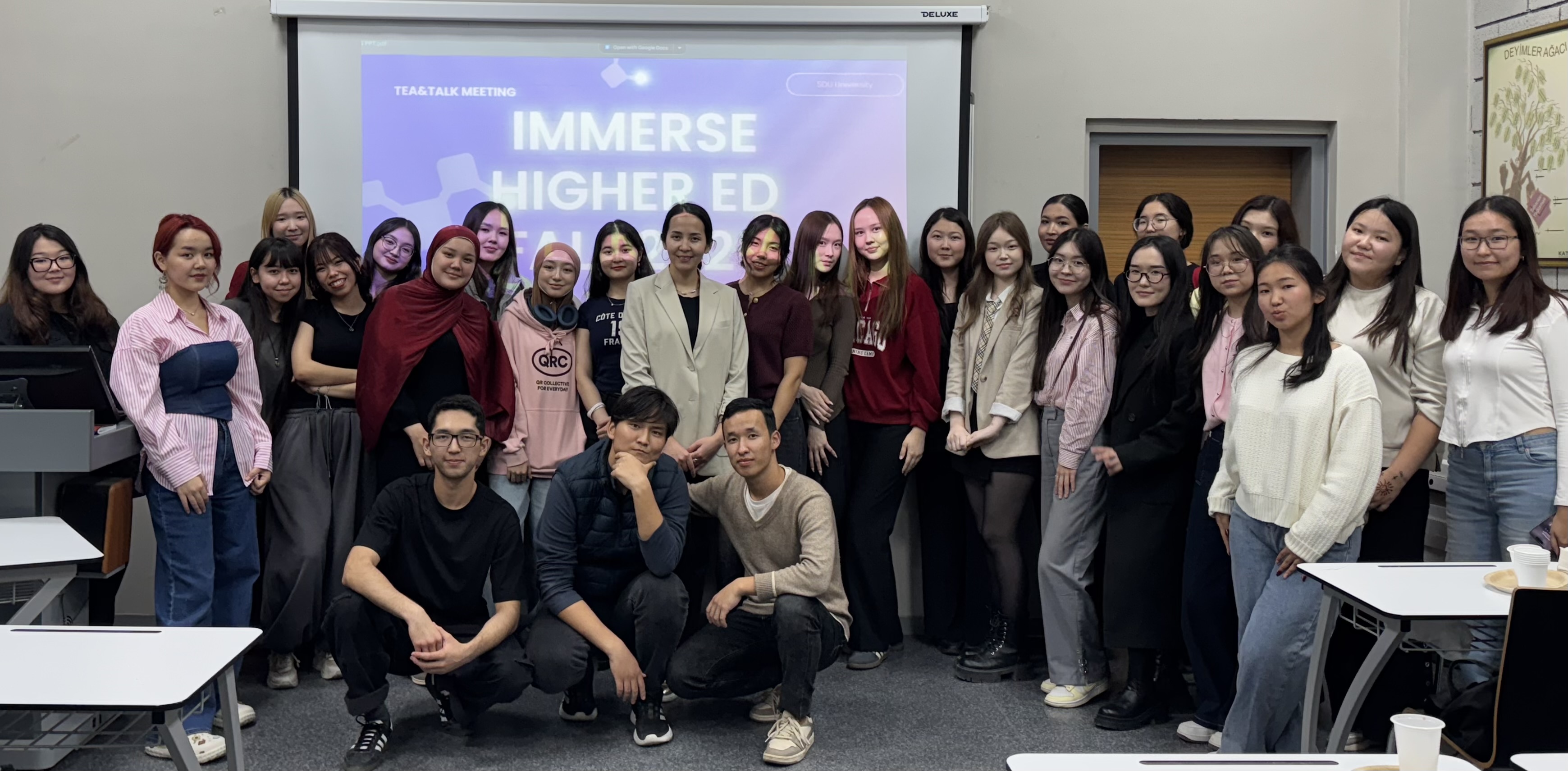
Ninety pre-service English teachers enrolled as students in SDU’s teacher preparation program participated in the nine-week pilot. Participation was optional and designed to supplement existing coursework.
Across the term, students completed:
• 470 self-paced lessons
• 1,965 AI-powered vocabulary and pronunciation activities
• 14 social events where they practiced with English learners around the world in real time
Before beginning the program, students completed a pre-survey to share their learning goals. Most hoped to improve speaking skills and confidence (83%), vocabulary knowledge (92%), pronunciation (65%), and listening comprehension (65%). Many also cited enjoyment of learning (69%), motivation (54%), and cultural understanding (48%) as priorities.
Notably, 91% reported feeling excited or very excited to try an AI-supported immersive experience as part of their English studies.
Key results
At the end of the 9-week period, students completed a post-survey that asked how IMMERSE had supported their progress.
Self-reported skill development

Students rated how much IMMERSE helped them improve various skills on a 4-point scale ranging from “not at all” to “a lot.” Results are shown in Table 1.
Listening comprehension and pragmatic language use showed the strongest perceived gains, with 71% of students reporting improvement “a lot” in both areas. Vocabulary knowledge followed closely, with 69% reporting substantial improvement.
More than half of students reported improving “a lot” in speaking, pronunciation, grammatical knowledge, and reading skills. Cultural understanding and writing showed more moderate gains, reflecting the program’s primary emphasis on spoken communication and real-time use of language.

Learner experience and confidence
Students also reflected on how IMMERSE influenced their confidence, motivation, and overall experience.
Engagement exceeded expectations. Half of participants reported spending one to two hours per week on IMMERSE, while 20% used the platform between two to four hours weekly.
Overall satisfaction was high. 95% said they would recommend IMMERSE to another English learner, and 88% said they would be disappointed if they could not continue using the platform.
Student reflections
Students consistently described IMMERSE as realistic, engaging, and grounded in meaningful real-world scenarios. Many highlighted the value of interacting with AI avatars and receiving immediate, contextualized feedback.
- “I liked the real-world background of the activities, especially practical scenarios. It made the topics realistic and meaningful, and at the same time helped me practice speaking skills naturally while solving real-life problems.”
- “I really liked the interactive and immersive approach of IMMERSE. It helped me feel more confident in speaking and improved my listening skills. And made language learning more engaging and practical.”
- “I truly felt as if I was inside the situation itself. This immersive experience significantly reduced my anxiety during speaking activities. It was especially helpful for learning conversational and real-life vocabulary, and it also taught me how to ask questions more naturally and confidently.”
- “I like how the AI starts a conversation based on the topic, but still lets me freely develop the scenario using the phrases we learned. Being able to personalise the conversation makes the practice feel more natural, fun, and engaging. And it helped me to understand the topic better.”
Next steps for IMMERSE + SDU University
Given strong engagement and reported gains in confidence and communication capability, the English department is exploring how IMMERSE could continue to support instruction in Spring 2026.
In addition, the pre-service English teachers who participated in the pilot expressed interest in using IMMERSE with their future English students as they transition into teaching roles.
The university is also considering follow-up research to examine how sustained use of IMMERSE supports learner outcomes over time.

Tricia Thrasher, PhD