.jpg)
.jpg)
Arizona State University Global Launch serves thousands of international learners each year, providing English instruction to students from more than 160 countries. Learners enter with varied proficiency levels and goals, ranging from academic preparation to professional advancement. Programs typically run 8 to 16 weeks and combine communicative instruction, academic focus, and technology-supported practice across on-campus and online formats.
As part of its ongoing commitment to learner success, ASU Global Launch explored new ways to strengthen spoken English practice beyond scheduled class time. Speaking remains one of the most difficult skills to practice consistently, particularly in ways that feel realistic, low-pressure, and repeatable. To address this gap, ASU partnered with IMMERSE to conduct a research study on its AI-supported, self-paced English program.
The goal of the research was to examine how guided, adaptive speaking practice could complement existing instruction by increasing practice frequency, reducing speaking anxiety, and supporting confident language use in real contexts.
Study Overview
The ASU and IMMERSE study examined how AI-supported, self-paced speaking practice could support spoken performance, confidence, and motivation in a higher education setting.
Over two consecutive eight-week periods, 199 English language learners participated. At the start of the study, students completed a speaking skills assessment and validated surveys measuring foreign language anxiety, willingness to communicate, and speaking motivation.
Throughout the program, learners completed five self-paced lessons per week at their assigned level and used IMMERSE for independent speaking practice. At the midpoint and conclusion of the 16-week intervention, students completed the same assessments to examine change over time. A subset of participants also took part in brief interviews to reflect on their experience.
Across the pilot, learners completed:
• 1,250 self-paced lessons
• 5,265 AI-guided pronunciation and vocabulary activities
• 13 live community events with English learners from around the world
IMMERSE’s self-paced AI-powered program
IMMERSE’s self-paced program is a fully asynchronous experience designed to support learners from beginner to advanced levels. The program includes more than 400 expert-designed AI lessons aligned to internationally recognized frameworks, including the CEFR.
Each lesson is created by curriculum specialists and guided by Adaptive AI, allowing practice and feedback to adjust to learner performance in real time. Lessons are approximately 20 minutes and take place in contextualized 3D environments such as workplaces, service settings, and everyday social scenarios.
Each lesson follows a consistent five-part structure (Figure 1):
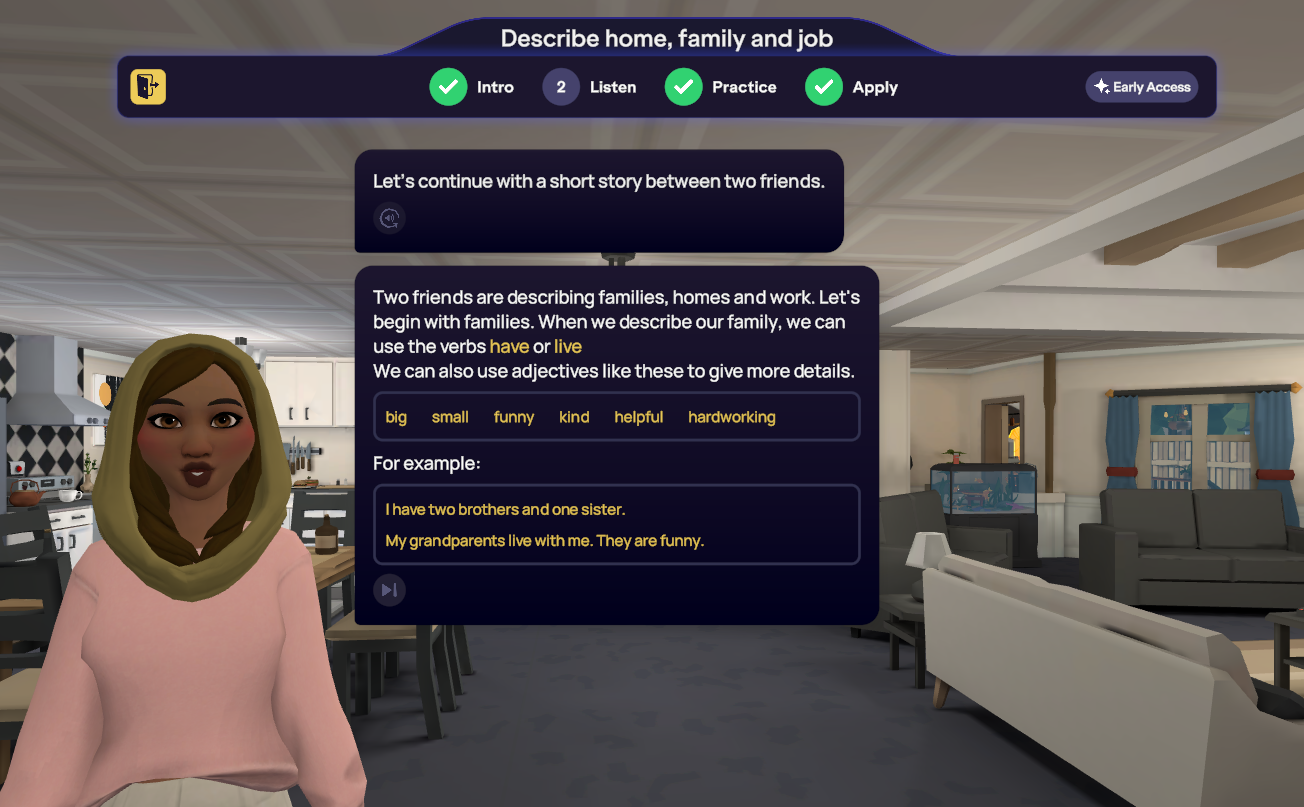
Figure 1. IMMERSE’s self-paced AI-powered program
- Intro – Learners are oriented to the context, goals, and key language for the session, followed by a brief warm-up.
- Listen – Learners observe a natural conversation and engage in guided comprehension checks.
- Practice – Targeted exercises provide focused practice with immediate feedback.
- Apply – Learners participate in a roleplay conversation with the AI tutor, applying new language in a spontaneous exchange.
- Feedback – Each session concludes with a performance summary highlighting strengths, targeted guidance, and next steps.
This structure supports steady progress while giving educators visibility into engagement and performance through built-in analytics.
Results and Impact
At the start of the study, learners completed previously validated questionnaires measuring foreign language anxiety, willingness to communicate, and speaking motivation.
Results showed that learners entered the program with moderate levels of speaking anxiety, indicating room for targeted support. Willingness to communicate was moderately high, suggesting learners were ready to engage when opportunities were available. Speaking motivation was also high, reflecting strong intent to improve spoken English.
To ensure appropriate placement, learners completed IMMERSE’s AI-driven speaking skills assessment. This assessment evaluates grammar, vocabulary range, fluency, and task completion within realistic speaking interactions.
At the start of the pilot, only 19% of learners passed their assigned level assessment, while 81% did not. This finding highlighted a gap between perceived readiness and demonstrated speaking performance at the onset of the project.
Speaking performance over time
Across the 16-week study, learners completed three speaking assessments at the beginning (week 1), midpoint (week 8), and end (week 16). These assessments evaluated grammar, vocabulary range, fluency, and task completion, defined as successfully achieving the communicative objective.
From the first to the second assessment, learners demonstrated measurable gains, including a 14% increase in task completion, an 11% increase in fluency, and a 5% increase in vocabulary range.
Between the second and third assessments, learners continued to improve. Fluency increased by an additional 10%, vocabulary range increased by 8%, and task completion by 6%.
Across the full duration of the study, learners showed a total improvement of 21% in fluency measures, 20% in task completion, and 13% in vocabulary range (Figure 2).
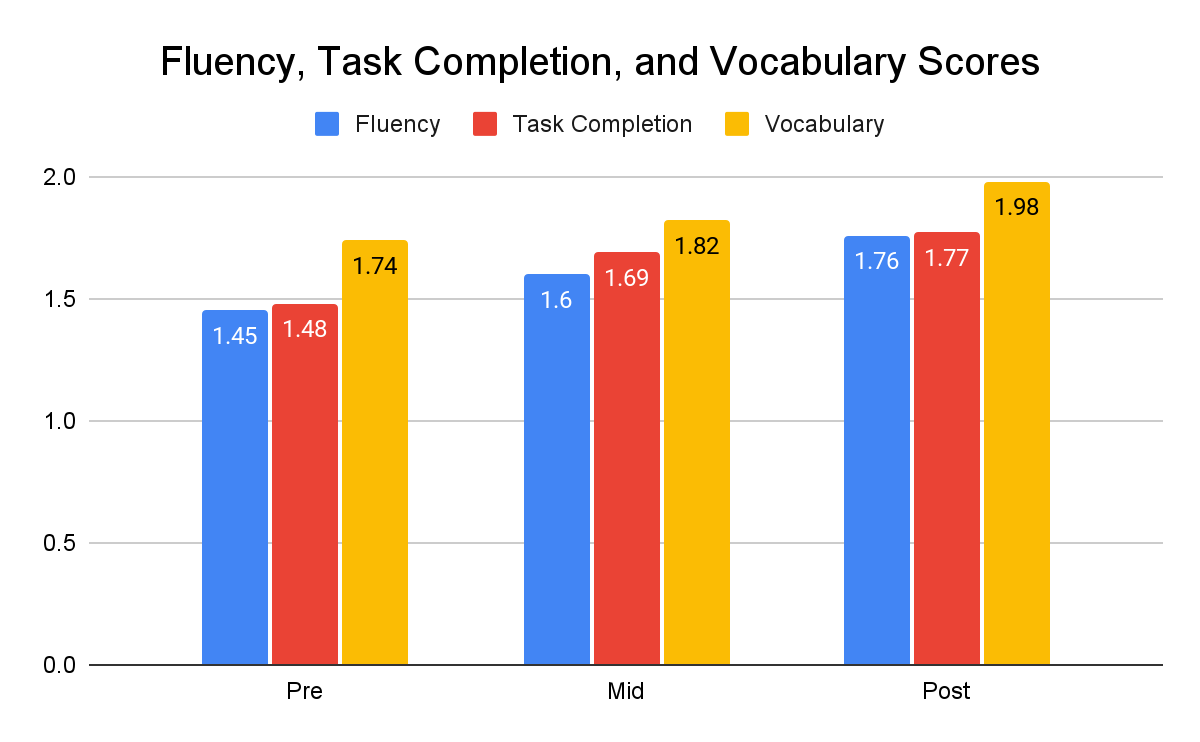
Figure 2. Speaking assessment scores over time
Learner experience and affective outcomes
Learners completed surveys measuring foreign language anxiety, willingness to communicate, and speaking motivation at the beginning, middle, and end of the program.
Results showed that willingness to communicate and speaking motivation remained consistently high throughout the program. Foreign language anxiety, however, decreased by 24 points (39%), indicating increased confidence and reduced pressure when speaking English (Figure 3).
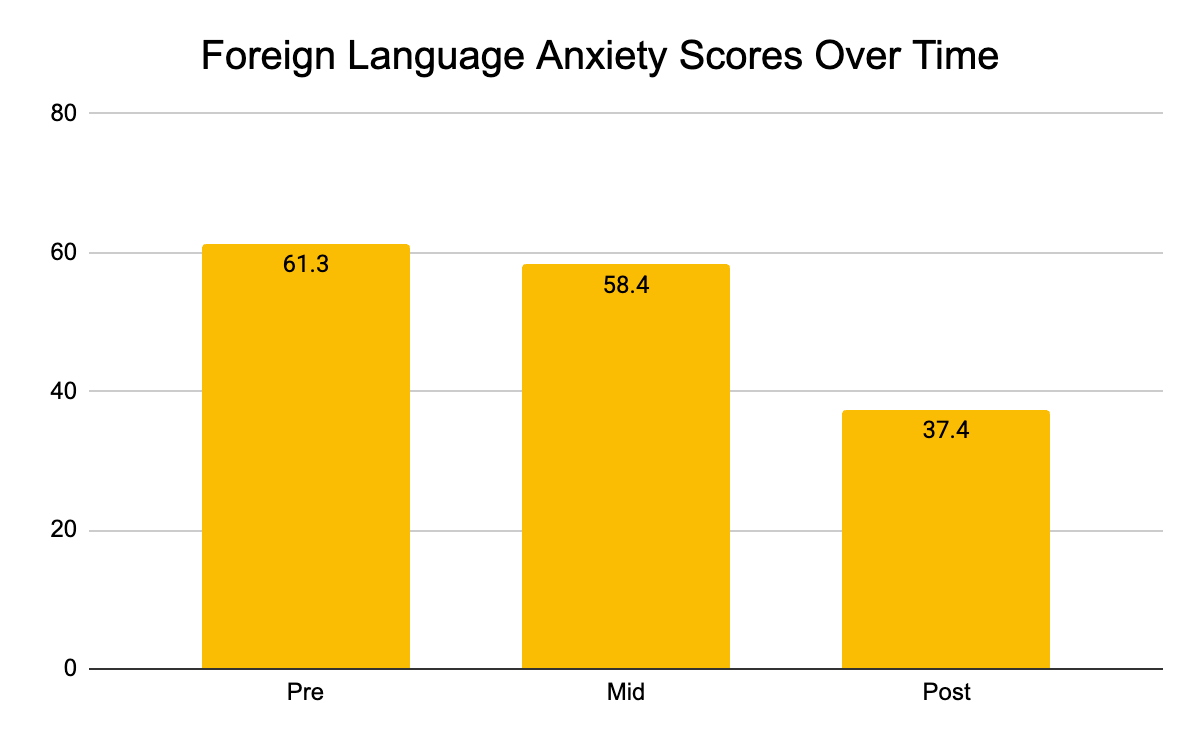
Figure 3. Foreign language anxiety scores over time
Reported speaking anxiety declined steadily across the 16-week period, with the largest reduction observed between the middle and end of the intervention.
Engagement and continued use: About half of learners expressed interest in spending more time on the platform, continuing to use IMMERSE for English learning, and studying additional languages in the future. 45% reported that IMMERSE helped them maintain motivation to practice English.
Ease of use and accessibility: More than 55% of learners reported that AI conversations helped them learn new phrases and sentences. A similar proportion agreed that the platform was easy to use and that they had the technological skills needed to engage successfully.
Learner reflections
- “I enjoyed using Immerse. It helped me practice speaking in a comfortable way, and I liked the interactive activities.”
- “Using Immerse really helped me feel more confident speaking English. I like how it’s interactive and lets me practice with real people, not just text or recordings. It made learning more fun and natural for me.”
- “It was a good experience using Immerse for learning English, and it is very useful in learning conversation.”
- “[IMMERSE] makes me feel like I'm communicating with someone who speaks English, and that gives me confidence to try.”
Takeaways and Next Steps
The ASU and IMMERSE project demonstrated that structured, AI-supported speaking practice can meaningfully extend higher education language programs. Learners engaged consistently, practiced in realistic contexts, and showed clear reductions in speaking anxiety alongside gains in spoken performance.
Building on these results, ASU will continue using IMMERSE in an upcoming term. The next phase will expand participation and introduce additional external pre- and post-assessments to further validate learning outcomes over time.
This continued collaboration will support deeper understanding of how sustained, supported practice contributes to confident communication beyond the classroom.

Interested in partnering with IMMERSE?
If your institution is exploring scalable ways to extend speaking practice, increase learner engagement, and support confident communication, we would welcome the opportunity to connect.
Reach out to the IMMERSE team to learn more about research partnerships and pilot programs.

Tricia Thrasher, PhD